loading...
Tampilkan postingan dengan label misalignment. Tampilkan semua postingan

Senin, 19 Oktober 2015

Patellar Femoral Syndrome Part 2

          My last post discussed the chronic condition known as patellar femoral syndrome, the related symptoms, and possible treatments.  Since it is always better to bypass injuries than figure out how to recover from them, this post will address some causes of this condition and how to avoid them.

      This condition occurs when the patella, or knee cap, is misaligned. When it is misaligned, it cannot slide along the groove in the femur when it moves. The patella can move out of this position as a result of an acute injury from a fall or a sudden movement, but one of the main causes is a misalignment that develops over a period of time.  This misalignment occurs when the muscles that are meant to stabilize this joint and hold the knee cap in position begin pulling on the knee joint unevenly.  

          Muscle groups work in pairs. The pairs work opposite each other - one group extending while the other flexes, or bends the joint. In order to create stability, both groups need to pull on the joint evenly, creating equal tension in all directions. When one muscle group is tighter than its partner group, the tension is unequal and the patella is pulled out of position.   
                   

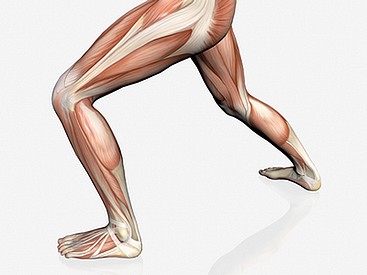
        This condition can be the result of tight quadriceps, which are the four muscles along the front of the thigh, or tight hamstrings, which are the muscles that run along the back of the thigh. These muscular imbalances can be avoided by making sure that all of the muscles are worked and stretched evenly. 
        
        Dancers tend to use certain muscle groups more than others and need to be aware of what muscles may not be worked as often. Cross training in other activities like yoga, Pilates, biking, swimming or walking can help ensure that all muscles are worked evenly.  Dancers also need to be aware of the iliotibial band, also called the IT band for short - this tendon connects the gluteus maximus muscle and the tensor fascial lata muscle to the skeleton.  Dancers use the gluteus maximus a lot since it is responsible for returning the leg to its original position after it has been lifted to the front, lifting the leg in arabesque, and is one of the main muscles involved in turning the leg out.  

            The tensor fascia lata is constantly relied upon by dancers as it is responsible for lifting the leg to the front and the side and rotating it inward. 

        The constant use of these two muscles causes the IT band to grow tight. Dancers need to stretch out the IT band often so it does not pull the knee joint out of position.

        By simply being aware of which muscles might need some extra work and being sure to stretch every muscle equally, most chronic conditions relating to poor skeletal alignment can be avoided.  It is extremely important for dancers to learn about muscular imbalances, to know their own bodies and to cross train to be healthy, strong dancers.



Senin, 28 September 2015

Patellar Femoral Syndrome - Part I


“When there is alignment and understanding, it is much easier to navigate forward together, ” - Karen Kimsey-House


          The knee is one of the most relied upon joints of the human body and is subjected to a great deal of force every day. During a simple activity like walking, the amount of force placed upon this joint is equal to anywhere from one-third to one-half an individual's body weight. When a person is climbing stairs the force placed upon the joint is equivalent to 3 times the individual's body weight, and when squatting, the knee must manage a force equal to 7 times the individual's body weight. When considering these facts, it is easy to understand that there must be a great amount of stress placed upon the knee in all kinds of dance. When the knee joint is functioning correctly, it is usually able to cope with this stress, however, when something is misaligned, and the knee joint is not functioning efficiently, the stress can be detrimental.


        Patellar femoral syndrome is a chronic condition in which the patella, or knee cap, is not correctly aligned. The patella is a triangular shaped bone that lies on top of the femur, or thigh bone. There is a groove in the femur which allows the patella to slide back and forth as the knee bends and extends. When the patella is not in alignment, it does not fit well into this groove, and the friction of the patella against the femur begins to wear away the cartilage found in the joint.


          When the knee joint is at rest, the patella is held in place by the capsule surrounding the joint, the ligaments on either side of the patella (the retinaculum), and the patellofemoral ligament, which connects the femur to the patella.

When the knee is actively bending or extending, the joint's stability is provided by the quadriceps (the four muscles located on the front of the thigh), the vastus medialis (which is a muscle that is found on the inner side of the thigh), the vastus lateralis (which is a muscle that runs along the outside of the thigh), and the iliotibial band, which runs from the gluteal muscle of the buttocks down the outside of the thigh.

          Dancers with patellar femoral syndrome will experience pain behind and around the kneecap during activities that require the knee to bend like squatting, jumping or climbing stairs. Occasionally, the dancer will also experience the knee buckling, or "giving way" when walking and may also complain of stiffness in the knee after sitting for a while.

          Any dancer experiencing these symptoms should rest the joint and use ice and anti-inflammatories to control the discomfort. The dancer should also contact a sports or dance medicine doctor to get a complete diagnosis. In most cases, once the cause is determined, physical therapy can help alleviate the symptoms and help realign the kneecap.

          Since an ounce of prevention is worth a pound of cure, my next post will focus upon the causes of patellar femoral syndrome and how to prevent this condition from occurring.

Sabtu, 03 November 2012

Alignment: Developing a Strong Foundation


"When you find that your life is out of alignment with your grandest idea of yourself, seek to change it." -Neale Donald Walsch
         A contractor would never try to build on an unstable infrastructure, yet each day dancers attempt multiple pirouettes and complicated combinations upon misaligned bodies that provide a shaky foundation.
         Correct body alignment allows for efficient muscle use, encourages a less bound and more relaxed approach to movement, reduces the risk of injury, and contributes to ease of movement.
         Whenever a dancer has difficulty with balance or executing a step, which he or she should be strong enough to do, it is important to first observe his or her body alignment.  Just as a building will weaken if there is a crack in the foundation, the body is weakened by misalignment.
         Before each class a dancer needs to re-establish a strong base by being certain that all five toes are flat on the floor.  Body weight should be equally distributed on each foot in a triangular pattern formed by the base of the big toe, the heel, and the base of the pinky toe.  The ankle should be lifted so that the base of the tibia is not rolling forward and causing the foot to pronate, or roll inward.  Subsequently, the knee joint should be centered over the ankle, and the hip joint should be centered over the knee.  The base of the ribcage should be in line with the pelvis while the sternum is lifted and the shoulders rest on the body, similar to how frosting rests upon a cake.  The neck should be lengthened with the head lifting as if it were a helium-filled balloon.
         Dancers are often told to “pull up their centers” which often causes a disconnect between the upper and lower halves and the front and back halves of the body. When a dancer “pulls up” the stomach, the tendency is to “sit” or relax into the back of the hips and open the ribcage, resulting in a swayed back.  Dancers engage their abdominal muscles, tuck the pelvis, and hyperextend their legs and believe they are properly aligned.
         This ideology results in gripping muscles instead of lengthening them, stressing ligaments instead of strengthening muscles, and skeletal misalignment.
         Instead, dancers need to think of the ankle being lifted by the patella, or kneecap, and the leg being lengthened by the pelvis lifting and lengthening the quadriceps and hamstrings.  Dancers also need to remember to lengthen the back of the torso as well as the front as if the entire upper body were being sucked up through a straw.  Additionally, it is important for dancers to lengthen through the front and back of the neck equally to avoid the turtling of the head that often occurs.
         Simply thinking about dance posture differently will help align the body, engage the muscles in a different way, and produce a lengthening of the body which will increase the efficiency of movement, improve mechanics and balance, and lead to healthy dancing.


Sabtu, 19 Mei 2012

Forcing Turnout: Is It Really That Bad For You?


            "Dance, an art form; the body, an instrument. Learn to play the instrument so you can master the art form."-Debbie Dee

       Turnout is an integral part of ballet technique.  It involves externally rotating each leg 90° so that the inside of the leg is visible from the front.  Turnout originated in the 1600’s during the reign of the French king, Louis XIV.  Ballet was performed on a proscenium stage, which necessitated sideways movement while displaying as much of the body as possible.  The shoes that were used were elaborately adorned, and it is believed that part of the reason for turnout was to display the beauty of the shoes while performing.

     
              When the “rules of dance” were written down by Pierre Beauchamp, they included the five positions that are the basis for ballet today and the concept of turnout.  Today’s turnout is much more exaggerated and extreme than it was originally, and perfect 180° turnout is the ideal to which today’s ballet dancers aspire.
           
            Unfortunately, not everyone’s body structure allows for perfect turnout.  The rotation must originate from the hip since it is the only ball and socket joint in the leg.  The ability to turnout is predetermined by the shape of the head of the femur, or thighbone, the angle that is formed where it inserts into the pelvis and the flexibility of the muscles and ligaments surrounding the hip.  While the actual skeletal structure cannot be changed, the flexibility of the hip can be increased through specific stretches to allow for a greater range of motion.

            Since few dancers are born with an ideal body structure for turnout, ballet dancers often feel the need to force their legs to rotate more than is anatomically feasible.  Dancers bend their knees, outwardly rotate their feet and then force the body to hold that position while they straighten their legs.  It is quite easy to spot the dancer who is forcing turnout.  Teachers need to check to see if the dancers’ kneecaps, or patellas, are facing the same direction as their toes.  If they are not, the rotation is being forced and the dancer is probably struggling to hold the position.

            It is the struggle to maintain forced turnout, which can lead to a variety of problems.  In an attempt to hold forced turnout and remain balanced, the dancer begins to grip the floor with the toes, which keeps the plantar tendon in a contracted state which inflames the tendon and eventually results in plantar fasciitis.  The dancer may also begin to pronate, or roll forward at the ankle.  Pronation causes the dancer to use the inside of the foot when pushing off the floor for relevés and jumps instead of using the bottom of the foot.  In addition to making the movement less efficient, this action puts pressure on the big toe joint, which will become inflamed and irritated, and eventually a bunion will develop.

            Forcing turnout from the ankle also causes the tibia, the large shinbone, to twist.  This twisting irritates the tibialis posterior muscle, which attaches to the tibia, and can result in shin splints.

            All of the unnatural twisting weakens the ligaments that are responsible for the stability of the ankle and the knee and disturbs the natural line of the Achilles tendon, causing tendonitis.  Tendonitis can also develop in the patellar tendon, which attaches the quadricep muscles of the thigh to the tibia.

            Lastly, in order to balance while forcing turnout and pronating, the body compensates by tipping the pelvis forward.  As this happens, the curve in the lumbar spine increases, causing swayback, or lordosis.  Lordosis stretches the hamstrings, puts a strain on the lower back and decreases the shock absorption quality of the spine.

            The feet are the body’s foundation.  Just like any change in a foundation causes detrimental shifts in a building, when the feet are placed in an unstable position, the other body parts must shift to compensate for the instability.  It is imperative that turnout originate at the hip joint and not be forced from the ankle or knee.  An efficient, healthy dancer is one who learns to make the most of his or her body, respecting and working with its strengths and within its limitations.