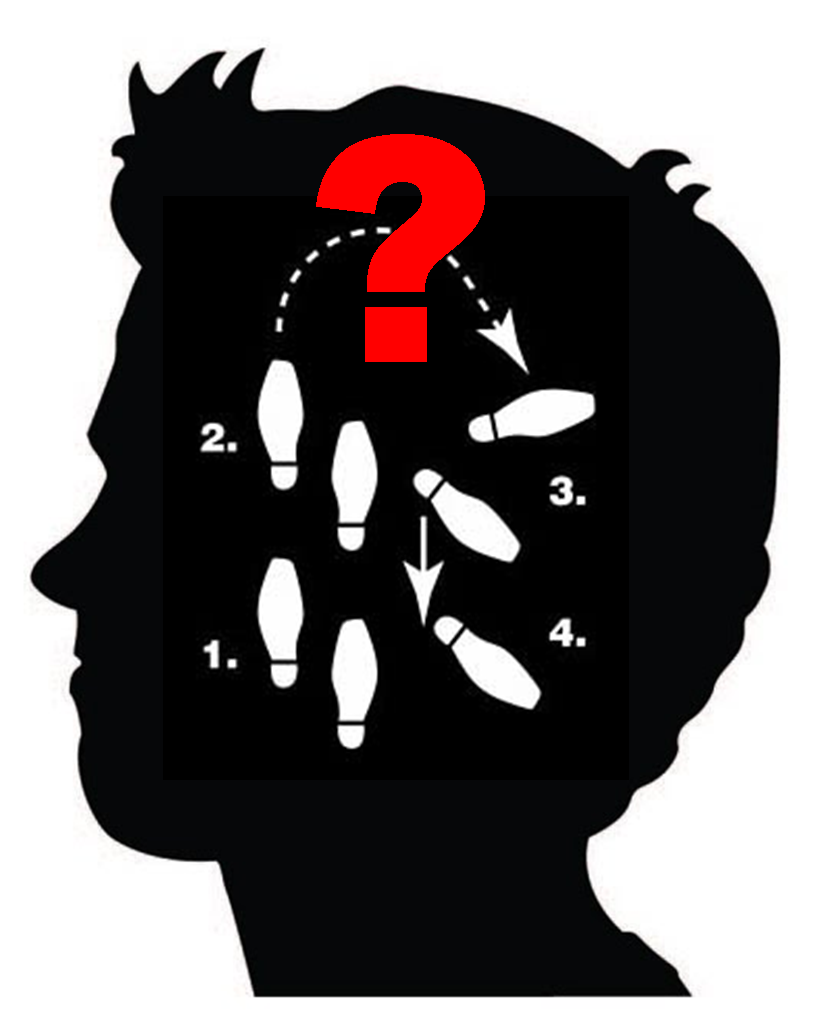
 Scientists are spending a lot of time researching exactly how our bodies learn to move and perform, and there are some interesting findings. When we move, our bodies are programmed to respond automatically. They respond quickly, reflexively and without any thought on our part. These responses are there to keep us balanced and to keep our bodies operating efficiently and effectively. When dancers or any other athletes begin to think about and analyze movements, they interfere with the bodies’ automatic responses and actually hinder motor performance. An example from every day life would be running up a flight of stairs. It may be something we do each day automatically. The minute we begin thinking about it, we find ourselves tripping and maybe even falling because we have interfered with the body’s automatic motor responses.
Imagine the dancer who is working on turning. She tirelessly concentrates on alignment, arm placement, balance, the strength of the relevé and spotting and yet falls out of the turn. She prepares again, concentrates even harder and falls again. It seems that the more she concentrates, the harder the turn becomes. She believes she is working on controlling her body, and she may, instead, be fighting against herself. The more control she attempts to exert over the turn, the more she impairs her body’s automatic muscular and balance responses to turning.
How then does the dancer stay in control of his or her movements without interfering with the body’s automatic motor learning responses?
Studies have shown that when dancers focus on something external, rather than on their bodies, their bodies work automatically and efficiently. When we stop thinking about controlling our bodies, we use fewer muscles more effectively, our heart does not beat as fast and we do not breathe as hard. All of this means that our bodies do not have to work as hard and undergo less stress which are two great goals to achieve.
Studies that involved jumping found that subjects who focused on jumping higher than something in the room achieved greater height than subjects who thought about the muscular effort of their feet and legs.
A study conducted on gymnasts introduced the use of stickers to help with turning jumps. The sticker, although placed on the gymnast’s body, served as an external focus. The gymnasts were working on half turns and were told to concentrate on which wall the sticker would be facing when the turn was complete. The subjects who wore the stickers improved both jump height and movement quality of the turn.
By using an external focus, dancers can use the body’s automatic motor responses to their advantage while also using tools to improve their technique.
The next post in this series will discuss how metaphorical imagery can be used by both dancers and dance educators to create external foci for dancers to use.


